Enter known letters
Use ? or _ for blanks, such as C?OS?WORD.
For when you are part-way through a grid. Type the letters the crossings have already given you, mark the empty squares, and compare the answers that fit before you commit ink. Add the clue when the pattern alone still leaves too many.
Not filling a crossword? The word pattern finder does the same letter matching without the clue and length assumptions of a grid.
Keep the pattern honest first. Add the clue after the grid gives you a shape.
Use letters you know and ? or _ for blank squares.
Add the clue only after the pattern gives you a real shape.
Use letters for squares you know and ? or _ for missing
squares. For example, C?T finds three-letter answers that start with C
and end with T.
Use ? or _ for blanks, such as C?OS?WORD.
Optional clue text can nudge simple plural, tense, abbreviation, and word-form signals.
Confirm the best answer against tense, theme, abbreviations, and crossing letters.
Enter a known-letter pattern above, or try an example.
Pattern matches come first. Clue text only nudges obvious forms like plural, abbreviation, and tense.
A matching pattern is only the first pass. Start with the words that fit the grid, then check tense, abbreviations, theme, and every crossing before you write the answer in.
Look at words that match the fixed letters before you worry about clue wording.
Check whether the answer should be plural, abbreviated, past tense, or themed.
One wrong square can make a good-looking candidate fail the grid.
Fixed positions do the real narrowing, especially on short answers.
Use one ? or _ for each unknown square.
The clue can nudge form, but it does not replace crossing letters.
Add one more crossing or check endings like S, ED, ER, and ING.
Try the literal answer first, then watch for abbreviations or theme wordplay.
Check both the across and down clue before trusting a candidate.
Use these examples when a short answer, blank square, or clue cue makes the candidate list hard to scan.
The crossword solver cleans pasted patterns, normalizes ? and _ as unknown letters, searches matching word lengths, and returns pattern candidates from WordyLab's word-game data. Optional clue text adds lightweight form cues for sorting, but the tool is intentionally transparent and does not claim to infer every clue meaning.
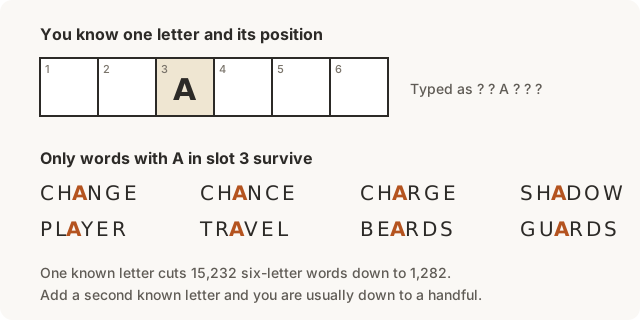
Enter the letters you know and use ? or _ for each blank square. The solver returns words with the same length and matching letter positions, then you confirm the best answer against the clue and crossings.
It can apply a light clue-aware sort for simple signals such as plural, abbreviation, tense, and matching clue wording. It is not a full semantic clue solver, so always confirm against crossings.
Use ? or _ for unknown letters. For example, C?OS?WORD and C_OS_WORD both work as pattern searches.
Crossword clues often depend on theme, tense, abbreviations, and wordplay. Use the list as a shortlist, then confirm against crossings.